We need to do more to prevent ACL injury in young people, and especially in girls. Yet nowhere in the world has successfully managed to introduce an injury prevention programme for standard school PE lessons. With YKC’s help, Tom Hughes is hoping to put that right.
If you’ve explored these pages before, you’ll know the surgeons of the Yorkshire Knee Clinic is involved in supporting ongoing studies into knee injury prevention. These are enormously important (to us and to the people who stand to benefit from them) because numerous studies worldwide have shown that knee injury prevention programmes can help reduce the risk of ACL ruptures and other knee injuries by up to 50%. The knock-on effect of that can be profound.
These programmes benefit everyone but appear to have greatest effect in girls’ and women’s sports, an area that has seen an almost constant stream of headlines* in the past year in the lead up to and in the wake of the World Cup.
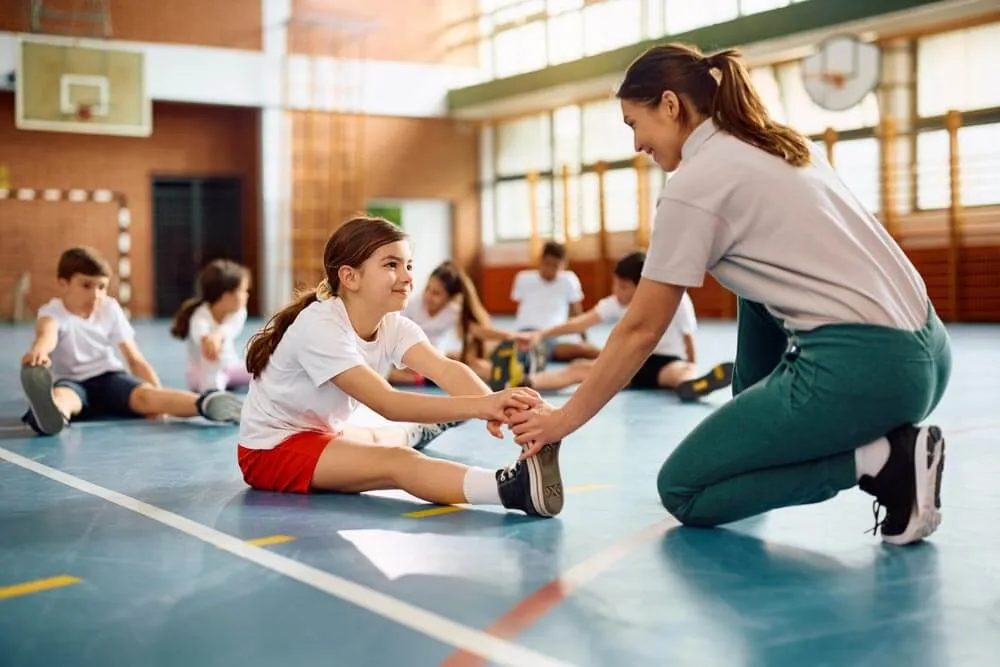
How do we reduce major knee injuries in school children?
We’ve always seen higher per-participant injury rates in girls’ sport compared with boys’. The reasons range from the biological to the mechanical, but the simple truth is girls are more likely to rupture their ACLs than boys. The growth of female participation in a wider range of elite sport is hugely welcome and long overdue, but it has placed a spotlight on injuries in female sport and made prevention all the more important.
That’s why I am extremely proud to have supported Tom Hughes through his PhD. Now nearing completion, Tom has been looking at the potential for substantially reducing major knee injuries in school children.
Tom’s research is built on strong evidence that we can reduce injury rates in young people if we can introduce appropriate injury prevention programmes not just at elite levels, but into all sports played by all school-aged children.
Multi-skills
There are two elements to Tom’s research. First is the prevention element, and the research supports a multi-sport programme which focuses on a range of movement and helps to build a range of muscles and ligaments. This is in contrast to the current situation, where specialism in single sports sees young people exercising the same muscle groups at the expense of others.
If you’ve been around as long as I have, you’ll remember the generalist PE lessons of past decades, where basic gymnastic skills helped young people to develop all their muscle groups. For various reasons, the basic movement tools we used to get from tumbling and beams and vaults have been lost, replaced by the hothousing demands of football, rugby, hockey and more.
It’s an approach that is increasing the rate of injury.
Through specific injury prevention multi-skill programmes, which can be introduced in warm-ups as part of school PE lessons and sports sessions, we can reduce the rate of injury.
Overcoming barriers
You might point out that some injury prevention programmes already exist — although you’ll gather from the continuing level of injury that nowhere in the world has successfully managed to introduce these programmes for standard school PE lessons.
This is where the second element of Tom’s research has real, practical application, because if we want injury prevention programmes to have the desired effect, we need to remove the barriers to their implementation within schools and clubs.
Through analysing the input of experts worldwide, Tom’s research recommends implementing programmes shorter than those already published, so they’re easier to work into a standard PE lesson. He also stresses the importance of involving PE teachers themselves, so they have ownership of and input to the programme, rather than having it imposed on them.
The first publication from Tom’s work is available now**. Other areas of his PhD are being submitted for publication over the coming weeks and we anticipate not just a successful outcome for Tom, but better long-term outcomes for all young people involved in sport.
If you are concerned about your child’s knee injury, contact us
Concerned About Your Child’s Knee?
If your child is experiencing persistent knee pain, swelling, instability or difficulty returning to sport, specialist guidance can help you understand what may be wrong and what to do next.
Contact the Paediatric Sports Knee Clinic to arrange an assessment and receive clear, considered advice about the appropriate next steps.
Request an Appointment

Specialist assessment and evidence-led care for children and adolescents with sports-related knee injuries.
Clinic Locations